The mantel is often the most visible real estate in a living room, and that makes it prime territory for making a design statement. Whether you’re refreshing a tired fireplace surround or building a room around your hearth, modern mantel decor doesn’t require expensive fixtures or professional staging. Instead, it’s about thoughtful arrangement, intentional spacing, and mixing materials in ways that feel current and personal. This guide walks you through practical approaches to modern mantel styling, from minimalist arrangements to layered textures and seasonal flexibility. You’ll learn how to balance function with aesthetics so your fireplace becomes a showcase rather than a catch-all shelf.
Table of Contents
ToggleKey Takeaways
- Modern mantel decor succeeds through intentional restraint—choose fewer, high-impact pieces and embrace negative space rather than filling every corner.
- Divide your mantel into thirds: anchor one-third with a focal point like a mirror or artwork, leave one-third open, and populate the remaining space with 2-3 carefully selected supporting pieces.
- Layer different textures and materials—ceramic, leather, metal, and wood—to create visual depth without clutter and keep the eye moving around the composition.
- Incorporate plants and dried botanicals strategically; low-maintenance varieties like pothos and snake plants add softness and connect indoor spaces to nature while improving air quality.
- Establish a stable base arrangement with year-round elements like a large mirror or sculptural object, then rotate seasonal accent pieces to keep your mantel fresh while maintaining its core identity.
- Use proper lighting with wall sconces, candles, or LED accent strips in warm tones (2700K) to transform your mantel from a daytime display into an evening focal point that feels sophisticated and modern.
Minimalist Mantel Styling For Clean, Contemporary Spaces
Minimalist design doesn’t mean barren or boring, it means intentional restraint. The core principle is choosing fewer, higher-impact pieces and giving them breathing room on the shelf.
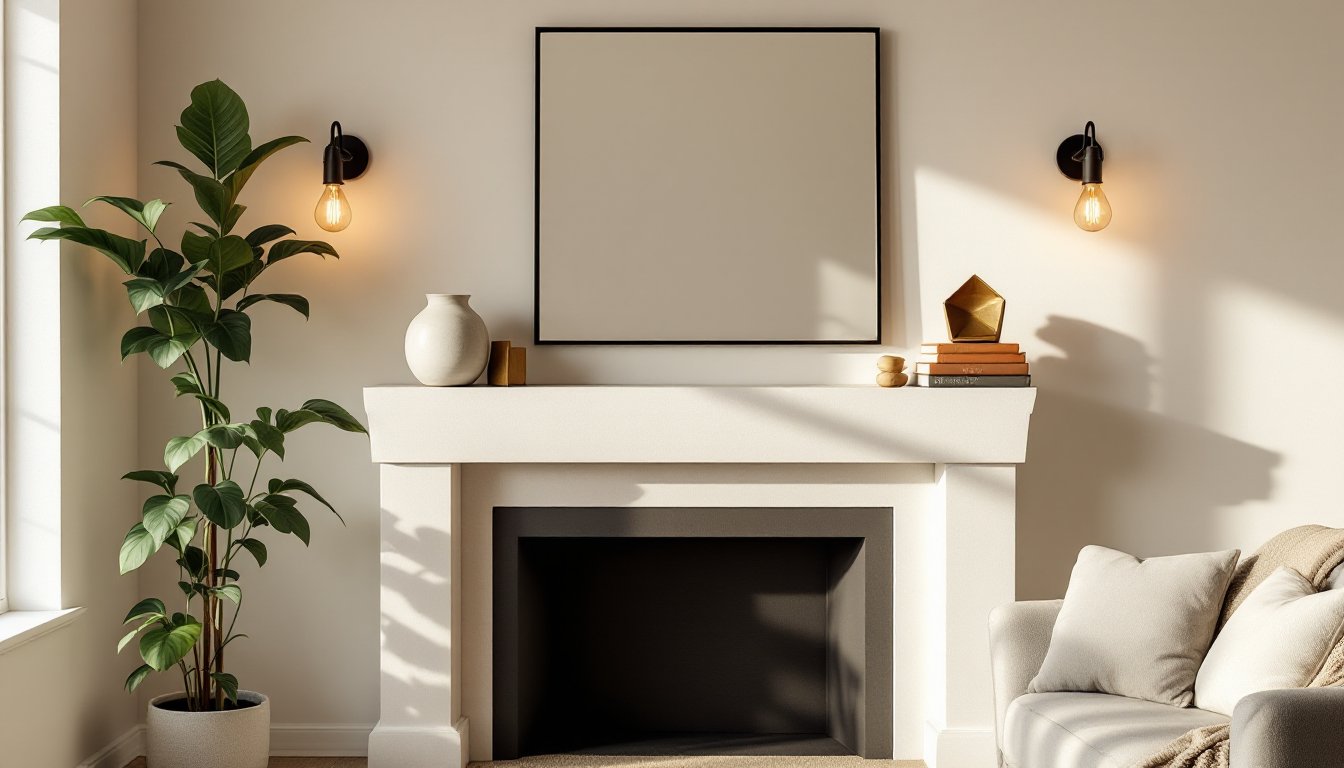
Start by measuring your mantel surface. Most standard mantels run 48 to 60 inches wide, though some are shorter or longer. Divide that space mentally into thirds. Your goal is to anchor one-third with a primary focal point (a mirror, artwork, or sculptural object), leave one-third as open surface, and populate the remaining third with 2-3 carefully selected supporting pieces.
For a truly minimal look, consider a single large-scale mirror centered above the mantel’s midpoint, paired with a low ceramic vessel or a small bookstack on one side. This creates asymmetrical balance without clutter. The key is negative space, don’t fill every corner. One or two pieces of live-edge wood or a single brass candlestick can feel more impactful than five smaller objects competing for attention.
Color restraint matters too. Stick to a palette of two or three tones: perhaps soft white, natural wood, and matte black. This cohesion makes the whole arrangement feel intentional. Avoid mixing warm and cool metallics (gold and silver together) unless you’re intentionally contrasting them as a design move. Keep shelving clean by storing seasonal décor elsewhere and rotating just what’s on display now.
Layered Textures and Materials For Visual Depth
Modern spaces still crave tactile interest, it’s what separates a styled mantel from a sparse one. Texture builds visual weight without adding clutter, so layer different finishes and materials strategically.
Start with a base of natural materials: unfinished wood, raw linen, or natural stone. These ground the display and feel contemporary without looking sterile. Layer in contrasting textures next: smooth ceramic glazes, matte metal frames, or rough concrete bookends. When you pair a glossy ceramic vase with a matte black frame and a soft linen runner, the eye moves around the composition.
For a practical example, arrange a low ceramic planter (creamy white or soft gray) on the left side, pair it with a leather bookend holding a small stack of art or coffee-table books, then place a sculptural brass or iron object (think: geometric shape, abstract form) on the right. The different surface finishes, smooth ceramic, worn leather, polished metal, create depth without visual chaos.
Don’t overlook functional textures either. A woven jute or linen table runner laid beneath your display unifies disparate objects and adds warmth. Wood-grain finishes (whether reclaimed or stained medium to dark) provide subtle texture and anchor modern arrangements beautifully. Avoid shiny, heavily patterned fabrics, modern layering favors understated, tactile materials.
Incorporating Plants and Natural Elements
Live greenery or dried botanicals soften modern decor and connect indoor spaces to nature, a hallmark of contemporary design. Plants on a mantel serve dual purposes: they’re functional decor and air-purifying helpers.
Choose low-maintenance varieties suited to indoor shelf life. Pothos, snake plants, and ZZ plants tolerate low to moderate light and inconsistent watering. Pair tall, trailing varieties on outer edges (they’ll cascade slightly and add movement) with smaller, compact plants toward the center. Use neutral ceramic or concrete planters, matte finishes work best with modern interiors, rather than bright ceramics or plastic nursery pots.
Dried pampas grass, eucalyptus, or dried grasses in minimal arrangements add height and airy texture without demanding water or sunlight. A single tall stem of dried pampas in a slim matte-black metal vase creates impact with minimal fuss. Natural wood elements, a piece of driftwood, a bundle of birch branches, or a turned wooden object, echo warmth without competing visually.
Place plants strategically so they don’t block sight lines to artwork or mirrors above the mantel. If your fireplace gets used, ensure potted plants are set back far enough to avoid heat exposure: most houseplants prefer temperatures below 75°F. Water less frequently during winter dormancy, and wipe down plant leaves monthly with a soft cloth to keep dust from accumulating on your display.
Statement Artwork and Mirrors as Focal Points
A bold piece of artwork or a large mirror is often the anchor for a modern mantel. This focal point pulls the eye and sets the tone for everything else.
Mirrors work exceptionally well on or above mantels. A large rectangular mirror with a slim metal frame (brass, matte black, or natural wood) reflects light and creates an illusion of spaciousness. Position it centered and slightly above the mantel line for visual balance. Alternatively, lean a large unframed mirror against the wall for a casual, contemporary vibe, just ensure it’s secure and won’t tip.
Artwork, whether an original painting, a high-quality print, or a gallery-style grid of smaller frames, commands attention when given proper placement. A single large canvas in neutral tones (whites, grays, blacks, or soft earth tones) suits modern spaces better than busy or highly colorful pieces. If you’re hanging multiple prints, maintain consistent frame widths and spacing (typically 2-3 inches apart) to look intentional.
When sourcing artwork, platforms like Homedit showcase contemporary design inspiration that can guide your choices. Consider the artwork’s relationship to adjacent objects: if your focal piece is geometric and dark, surround it with softer, lighter elements. If it’s colorful, keep surrounding décor neutral so the piece remains the star. Frame color matters too, modern aesthetics favor natural wood, matte black, or thin metallic frames over ornate finishes.
Lighting Solutions For Ambiance and Functionality
Proper lighting transforms a mantel from daytime display to evening focal point. Modern mantel lighting combines form and function, adding warmth without looking staged.
Wall sconces mounted on either side of a centered mirror are the go-to approach. Install matte black or brushed-brass fixtures with frosted or warm-toned bulbs (2700K color temperature mimics candlelight). Position sconces about 36-40 inches from the floor and 12-16 inches from the center of the mirror. This requires running wiring behind the wall or into existing conduit, not a trivial task for renters, but worth planning if you own. Always turn off power at the breaker before working with electrical, and consider hiring a licensed electrician if you’re uncertain.
Candles are another modern-friendly option. Pillar candles in neutral tones (cream, soft gray, or white) arranged asymmetrically add warm light and texture. Use matte or concrete candlesticks to elevate them slightly and increase visual interest. Battery-operated candles with timers offer the same aesthetic without fire risk on a busy mantel.
Accent lighting from below or behind artwork creates drama. A slim LED strip light installed along the wall just above the mantel edge can graze upward onto hanging artwork, highlighting texture and depth. These strips are low-cost, low-voltage, and easy to install with adhesive backing. Warm white LEDs (not harsh cool white) maintain the contemporary feel while adding sophistication. Position lighting so it doesn’t shine directly into eyes when sitting in adjacent seating.
Seasonal and Flexible Mantel Arrangements
Modern spaces thrive on flexibility, and mantels are perfect vehicles for seasonal updates without feeling forced or over-themed. The key is rotating core elements while keeping the fundamental design skeleton stable.
Establish a base arrangement that you keep year-round: perhaps a large mirror, a sculptural object, and one or two perennial plants. Then swap secondary pieces seasonally. In spring and summer, replace heavier ceramics with lighter, airier forms, a tall stem of fresh grass or a pale linen fabric draped loosely. In fall and winter, introduce warmer wood tones, deeper ceramics, or a low brass or copper accent piece. Dried botanicals and terracotta-toned vessels suit autumn: soft whites and metallics feel fresh for winter.
For inspiration on seasonal styling, resources like Homify and Decoist offer gallery examples of interior arrangements across seasons. Study how designers balance change with consistency, notice that focal pieces (mirrors, large artwork) typically stay put while accent objects rotate.
Keep off-season décor in labeled boxes in a closet or storage area. Measure your mantel first, then photograph and document which pieces work together so reassembly is faster next year. This approach prevents the “I’ll just add one more thing” creep that turns a thoughtful display into clutter. Flexibility also means you can pivot quickly if a new object catches your eye at a thrift store or antique shop, modern design rewards intentional additions, not impulsive piling.
Conclusion
Modern mantel decor thrives on restraint, intentional material mixing, and space to breathe. Whether you lean minimalist, textural, botanical, or art-forward, the unifying principle is choosing fewer, higher-impact pieces and resisting the urge to fill every inch. Start with a strong focal point, a mirror or artwork, then build around it with 2-3 supporting elements that contrast in texture and material. Rotate seasonally to keep the display fresh without losing its core identity. Your fireplace mantel can be a showcase of thoughtful design and personal style when you approach it with the same care a designer would.