A well-designed patio isn’t just outdoor real estate, it’s an extension of your home where you actually want to spend time. Whether you’re hosting summer barbecues, reading with morning coffee, or simply escaping inside for an evening, your patio needs to work as hard as it looks good. The right patio design ideas blend practicality with aesthetics, turning a neglected patch of yard into a genuine living space. In 2026, homeowners are moving beyond basic concrete slabs and embracing designs that reflect their lifestyle, budget, and local landscape. This guide walks you through seven proven patio styles, each with practical tips to help you design and build something you’ll actually use.
Table of Contents
ToggleKey Takeaways
- Modern minimalist patios use large-format porcelain pavers and neutral color palettes to create low-maintenance outdoor living spaces that remain timeless for years.
- Rustic and farmhouse patio designs celebrate natural materials like reclaimed brick and fieldstone, but require yearly sealant treatment on wood to prevent deterioration.
- Mediterranean-inspired patios incorporate warm-toned stone, fragrant herbs, water features, and soft lighting to create an inviting gathering space that evokes European villa ambiance.
- Tropical retreat designs thrive with layered planting, water features, and weather-resistant furniture, though they demand regular maintenance including seasonal plant rotation in non-tropical climates.
- Small space patios require strategic material selection, multipurpose furniture, and thoughtful vertical storage to maximize functionality without visual clutter.
- Invest in layered lighting with warm-colored bulbs and dimmer controls to transform patio designs from day-use-only spaces into welcoming evening destinations.
Modern Minimalist Patios
Modern minimalist patios strip away clutter and focus on clean lines, neutral materials, and purposeful design. Think geometric pavers, low-maintenance plantings, and furniture that serves one clear function. The goal isn’t emptiness, it’s intentionality.
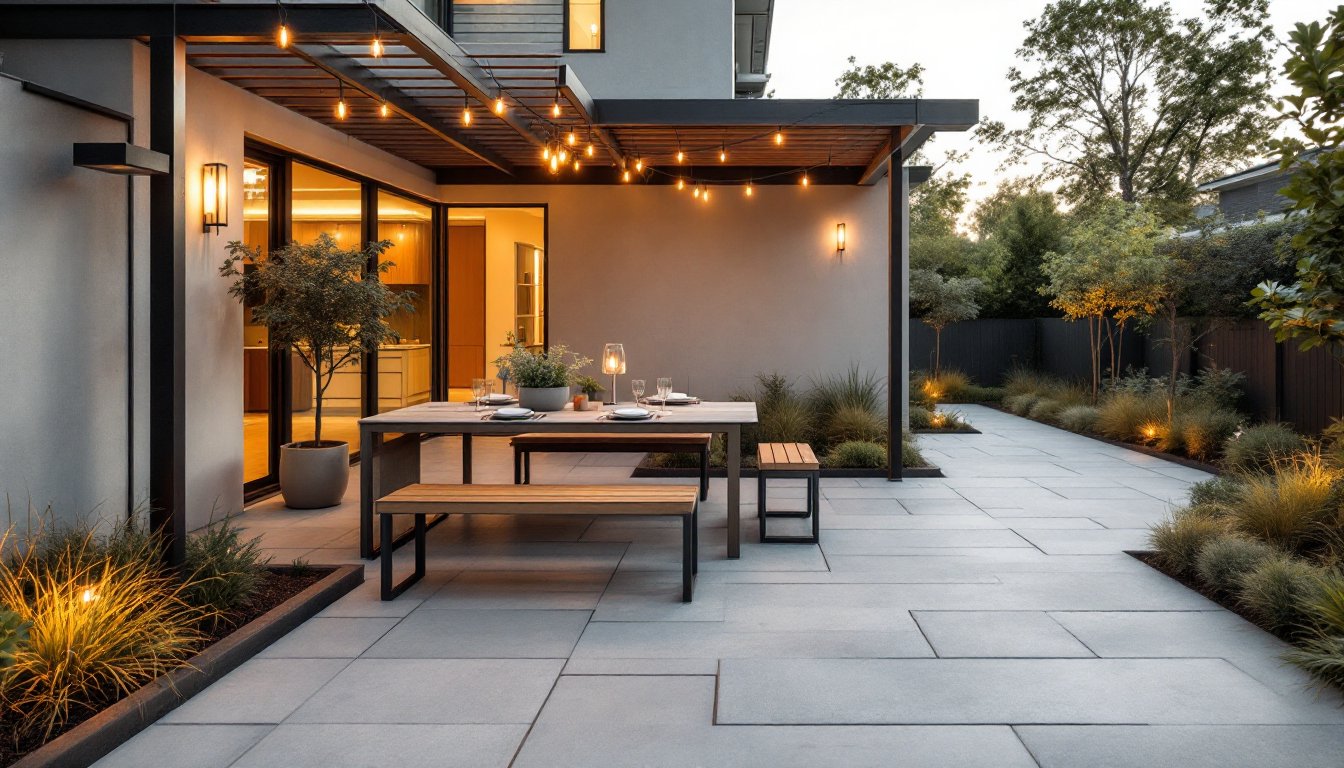
Start with hardscape materials. Large-format porcelain pavers (24″ × 24″ or larger) create seamless sightlines and require fewer grout joints to maintain. Pair them with a single accent material, perhaps steel or Corten edging, to frame your space without visual noise. Avoid mixing too many paver colors or textures: stick to grays, blacks, and charcoal tones.
Furniture choices matter here. One well-made dining table and bench combo beats a chaotic mix of chairs. Add a pergola with clean horizontal slats instead of vining plants. Keep the color palette to three tones maximum: your base paver color, one accent (like dark metal), and white or natural wood for contrast. The beauty of minimalism is that maintenance drops significantly, fewer plants to trim, fewer cushions to store, and a timeless look that won’t feel dated in five years.
Cozy Rustic and Farmhouse Styles
Rustic patios celebrate natural materials, weathered finishes, and that “lived-in” charm. These spaces feel warm and welcoming, perfect if you want your patio to feel like a getaway rather than a showpiece.
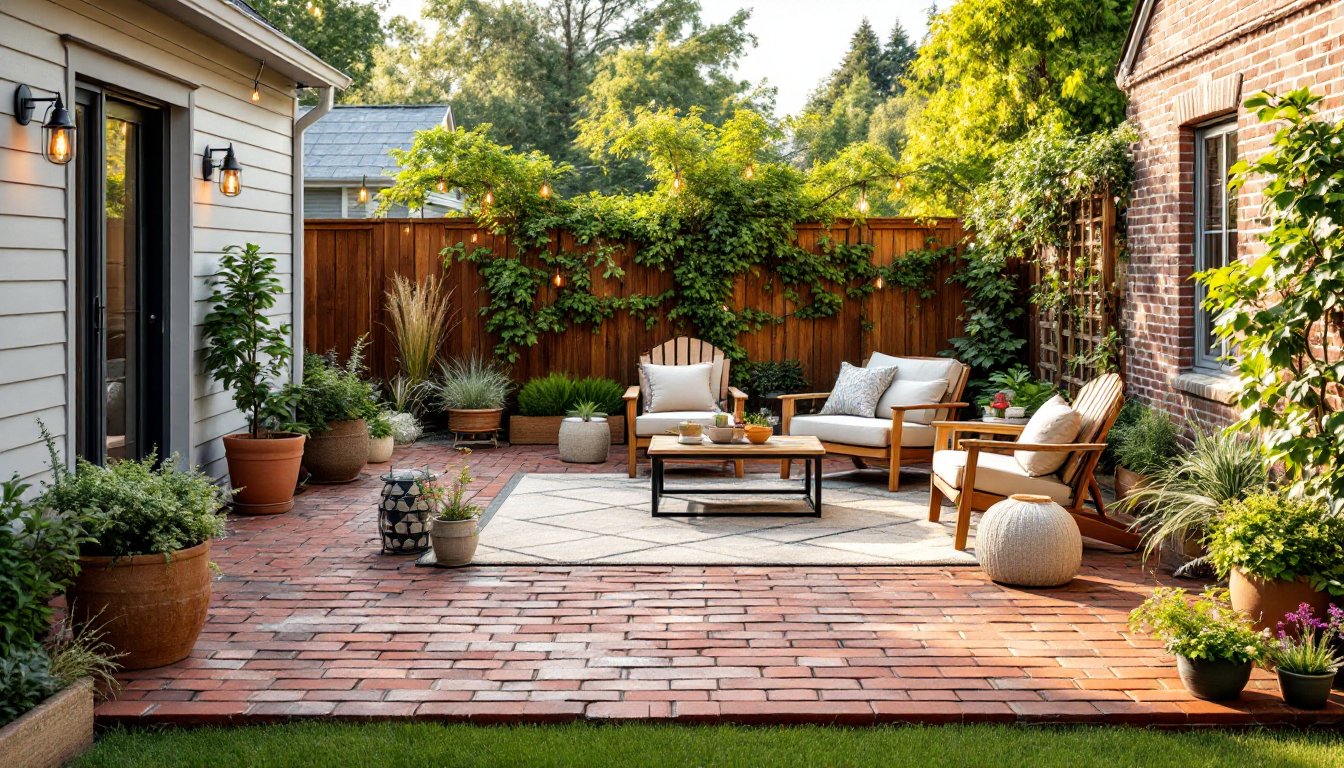
Material choices are key. Irregular stone pavers, reclaimed brick, or permeable gravel create authentic texture. Unlike minimalist patios, mixing materials here is encouraged, layering stone with wood creates visual interest. Consider a reclaimed wood pergola with climbing vines or a stone firepit surround using locally-sourced fieldstone.
Furniture and decor should look like they’ve earned their patina. Wrought iron benches, weathered Adirondack chairs, and wooden picnic tables fit the aesthetic. Add lantern-style lighting with Edison bulbs, vintage planters, and climbing ivy or clematis on trellises. The trick is balancing “rustic” with functional, make sure chairs are actually comfortable and that wood surfaces are sealed against rot. A rustic patio that falls apart in two seasons isn’t charming, it’s neglected. Treat wood with exterior-grade sealant yearly and check mortar in stone joints for cracks.
Mediterranean-Inspired Outdoor Living
Mediterranean design evokes the warmth of Tuscany, Greece, and Spain, earthy tones, natural stone, and an emphasis on gathering and community. These patios feel like an escape to a villa, even if you’re in Minnesota.
Start with warm-toned stone or terracotta pavers. Irregular shapes and hand-finished surfaces add authenticity. If budget allows, real stone (limestone, travertine) gives unmatched character, though porcelain tiles mimicking these textures cost less and require less maintenance. Add a pergola with climbing grape vines or jasmine, function and fragrance combined.
Color and accents set the mood. Warm ochre, sage green, and terracotta planters filled with herbs (rosemary, basil, lavender) are non-negotiable. Consider a water feature like a small fountain or birdbath, the sound of water is central to Mediterranean design. For furniture, look for wrought iron or wood pieces with cushions in warm earth tones. A built-in stone bench or eating area elevates the design without taking up moveable space. Lighting should be soft, hanging lanterns or uplighting on stone walls create evening ambiance. The Gardenista guide to deck and patio design offers detailed material sourcing tips for Mediterranean-inspired hardscapes.
Tropical Retreat Designs
Tropical patios embrace lush greenery, water features, and that resort-style relaxation. You don’t need to live in Florida, tropical design works anywhere you can manage the plants or incorporate them seasonally.
Start with permeable pavers or composite decking in light tones (tan, cream) to keep the space feeling airy. Large-format pavers work here too, but slightly rougher finishes prevent slipping when wet. Add multiple layers of planting: tall palms or bamboo as backdrop, mid-level shrubs, and ground covers. The key is creating visual depth and a sense of enclosure.
Water amplifies the tropical feel. A small waterfall feature, pond, or even a stylish fire bowl creates a focal point and ambient sound. Furniture should be casual and comfortable, rattan, wicker, or low-maintenance resin wicker chairs with cushions. String lights overhead or a louvered shade structure provide dappled light. Choose weather-resistant fabrics in vibrant but cohesive colors, coral, turquoise, and sage rather than a rainbow. Maintenance is higher here: plan on regular weeding, pruning, and seasonal plant rotation if you’re in a non-tropical climate. Consider containerized plants you can move indoors during cold months.
Functional Patios for Small Spaces
Small patios demand smart planning. A tiny space won’t accommodate lounge chairs and a dining table, so prioritize what you actually use. Design accordingly.
Materials matter more in small spaces. Choose one paver type and color to avoid visual fragmentation. A 12′ × 10′ patio feels larger with a consistent surface. If budget is tight, consider permeable pavers or a combination of pavers and mulch, less expensive and still functional. Build up with vertical storage: wall-mounted planters, hanging shelves, or a trellis instead of spreading plants across the footprint.
Multipurpose furniture is your friend. A storage bench provides seating and houses cushions or garden tools. A folding table unfolds for dinner and folds away when not needed. A single potted shade tree creates instant coziness without permanent construction. Lighting is crucial in small patios, uplighting on walls or overhead string lights make the space feel intentional and drawn in. Wall color matters too: lighter tones reflect light and expand the visual footprint. The Better Homes & Gardens home improvement guides include detailed strategies for maximizing small outdoor spaces. Don’t underestimate the power of good lighting and thoughtful plant placement, a small patio that’s well-designed beats a large, cluttered one every time.
Lighting and Furniture Essentials
Lighting transforms a patio from day-use-only to an evening destination. Invest here, it’s the difference between a patio you use and one you avoid after sunset.
Layer your lighting: ambient (overhead or string lights for general brightness), task (lights over a dining table or grill), and accent (uplighting on plants or water features). String lights are affordable and instantly cozy: opt for warm-colored bulbs (2700K color temperature) rather than bright white. Solar options exist but are dimmer, useful for pathway marking, less so for actual illumination. For serious cooking or dining, install hardwired fixtures on a dimmer. Harsh overhead lights kill ambiance, so aim for 30–50% dimming capability.
Furniture selection depends on your patio style, but universals apply: choose weather-resistant materials (teak, metal frames with resin wicker, or high-quality cushion covers). Measure twice. A sectional that fits the living room will swallow a small patio. Commit to moveable seating that stacks or stores, this flexibility lets you adapt for gatherings or quiet evenings. Cushions should be removed and stored during off-season or choose removable covers you can wash. The Spruce home decor guides detail furniture selection for different climates and seasons. Maintenance: once yearly, clean cushions (mild soap, rinse, air dry), seal wood furniture, and inspect metal legs for rust. A five-minute wash-down in spring keeps dust off your setup.
Conclusion
Your patio design should reflect how you actually live, not how you think you should live. Start with one style that resonates, whether it’s the clean lines of minimalism or the lush abundance of tropical design, then adapt it to your budget, climate, and maintenance tolerance. The best patio isn’t the most expensive or elaborate: it’s the one you use every single day because it feels like home.