Mid-century modern design has endured for a reason, it balances clean lines, functionality, and understated elegance in a way that never feels dated. Updating a bedroom with mid-century modern ideas means embracing simplicity, quality materials, and thoughtful proportions rather than chasing trends. Whether you’re renovating from scratch or refreshing key pieces, mid-century modern offers a framework that works with existing structures and suits most budgets. This guide walks you through the design principles, material choices, and practical decisions that transform a bedroom into a calm, styled space rooted in authentic MCM design rather than superficial trends.
Table of Contents
ToggleKey Takeaways
- Mid-century modern bedroom ideas prioritize clean lines, quality materials, and functionality over trends, creating a timeless aesthetic rooted in the 1945–1969 design movement.
- Choose a neutral color palette of warm whites, grays, and taupes as your foundation, then introduce accent colors sparingly through a single feature wall or textiles in muted tones like forest green and mustard yellow.
- Invest in iconic MCM furniture pieces—a low-profile bed frame with tapered legs, simple nightstands, and tapered-leg dressers in solid wood like walnut or teak—rather than trendy reproductions that use particle board.
- Layer your lighting with a sculptural statement floor lamp, bedside table lamps, and wall sconces positioned at 60–66 inches for reading, avoiding elaborate overhead chandeliers that conflict with MCM minimalism.
- Use high-quality textiles like linen and wool in neutral or subtle geometric patterns to add warmth and texture without clutter, keeping pillows to three pieces and rugs at a solid neutral tone or understated pattern.
Define Your Mid Century Modern Aesthetic
Mid-century modern as a design movement spans roughly 1945–1969, but its principles remain timeless. The style prioritizes form following function, every line and material serves a purpose. In a bedroom context, this means choosing a low-profile bed frame, avoiding ornament for ornament’s sake, and letting wood grain, metal accents, and geometric shapes do the talking.
The aesthetic rejects clutter. A well-designed MCM bedroom feels uncluttered and intentional: items on surfaces are minimal and carefully curated. Walls are often neutral or feature a single bold color: patterns, if used, are geometric rather than floral. The overall mood is calm and focused on rest, not entertainment or display.
Think of MCM as a reaction against mid-20th-century maximalism. It says: quality over quantity, honest materials over pretense, and simplicity as sophistication. When you’re shopping for a headboard, nightstand, or rug, ask yourself whether each piece would belong in a 1960s home designed by Eames or Wegner. If the answer is no, it probably doesn’t fit the aesthetic.
One practical note: MCM doesn’t mean cold or sparse. Warm wood tones, a few choice textiles, and thoughtful lighting create warmth within the minimalist framework. The key is discipline, every object should earn its place.
Choose the Right Color Palette and Wall Treatment
Mid-century modern bedrooms typically rely on a foundation of warm neutrals: soft whites, warm grays, taupe, and pale warm beige. These backdrop colors let furniture and accents stand out. Wood floors or a medium-tone wood veneer on the bed frame are the visual anchor.
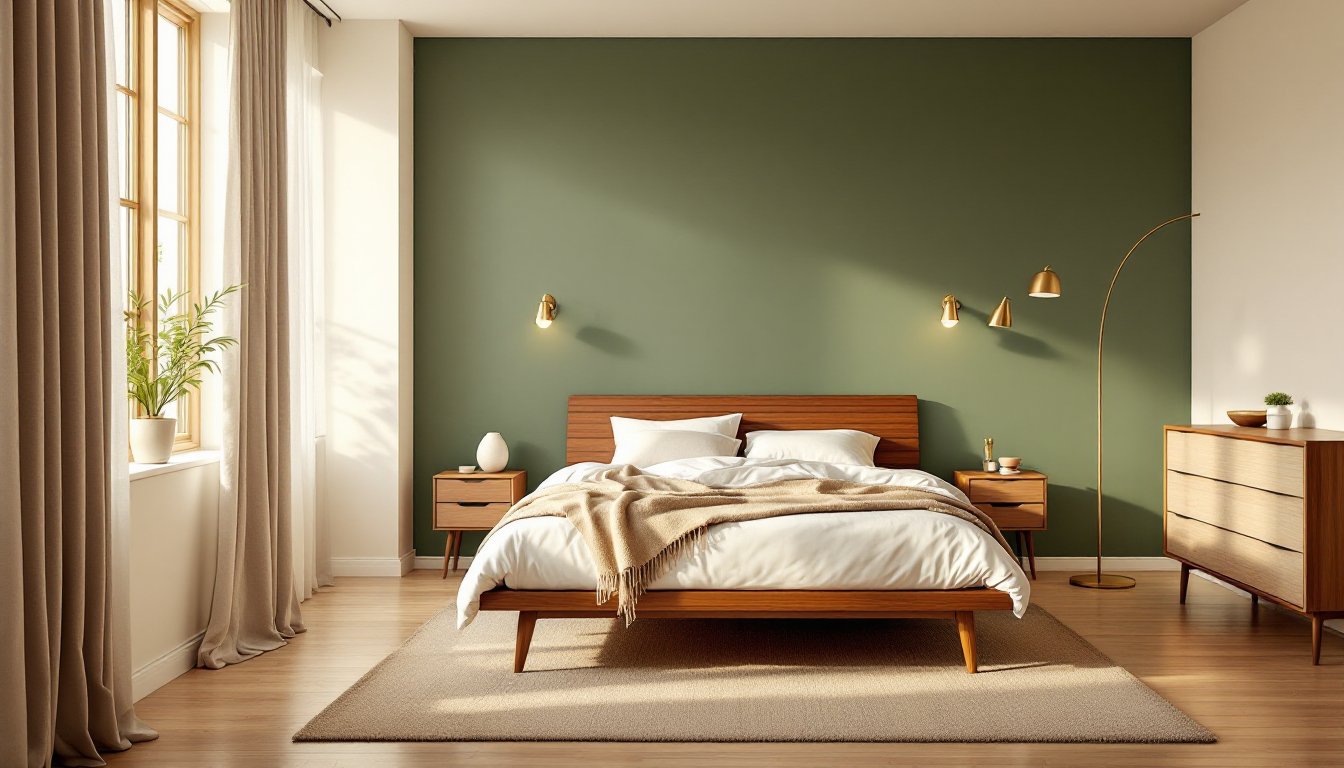
Accent colors, when used, are often deep and muted: forest green, mustard yellow, burnt orange, or charcoal. A single accent wall works well in MCM design, painted one bold color while others remain neutral. Alternatively, you can keep walls neutral and introduce color through textiles or a painted headboard.
For wall finish, stick to eggshell or satin primer and paint, a flat finish reads as dated and shows dust. Eggshell has slight sheen and is easier to wipe clean: satin is slightly more durable. Paint coverage typically runs 300–400 square feet per gallon, depending on the color and whether you’re priming first. Always prime if you’re applying a bold color over a lighter base.
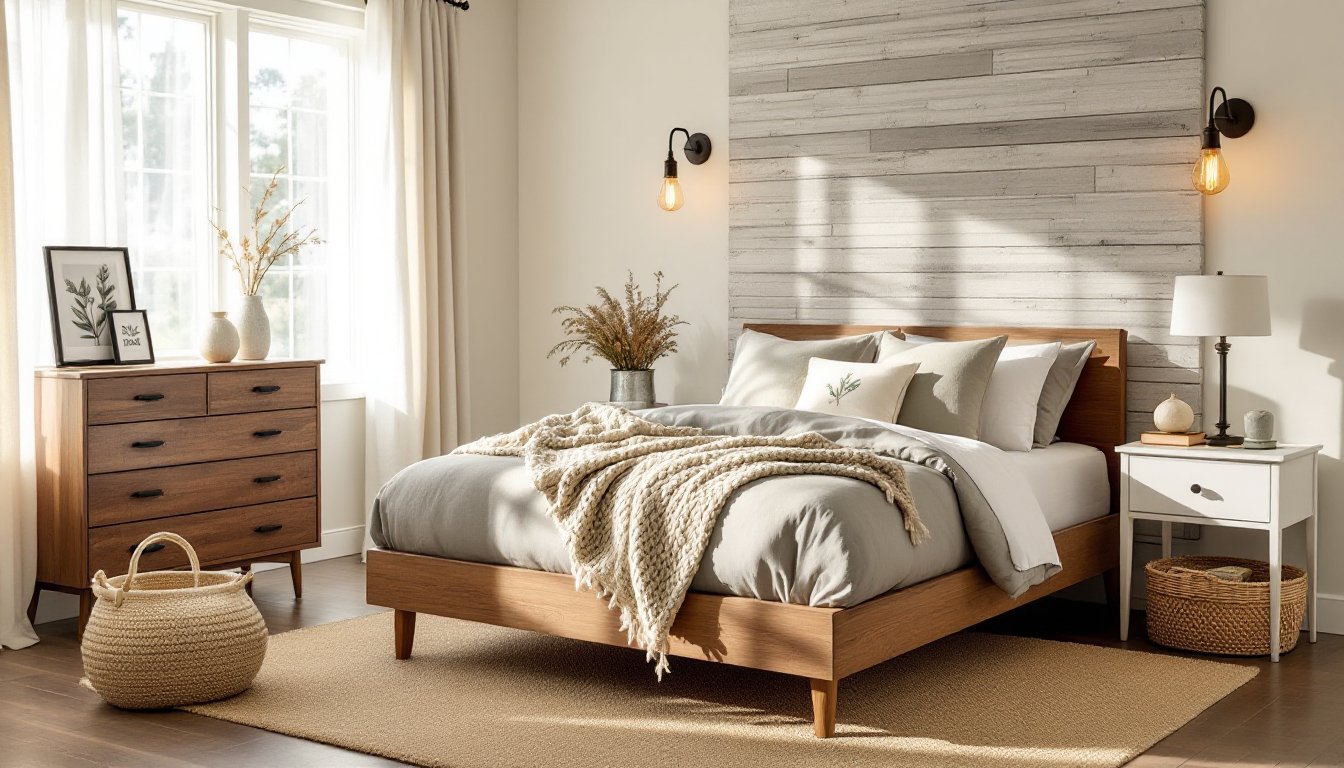
Shiplap, wallpaper, or paneling can work but be selective. Vertical shiplap or wood paneling in a warm natural finish (not whitewashed) complements MCM, especially if it covers a feature wall behind the bed. Geometric wallpaper can work if it’s restrained and authentic to the era, think small-scale geometric prints in muted tones, not oversized florals.
Avoid busy patterns. MCM celebrates open, restful walls. If you want texture, consider a subtle weave or linen-look paint finish rather than heavy patterning.
Select Iconic Furniture Pieces That Define the Style
Bed Frames and Headboards
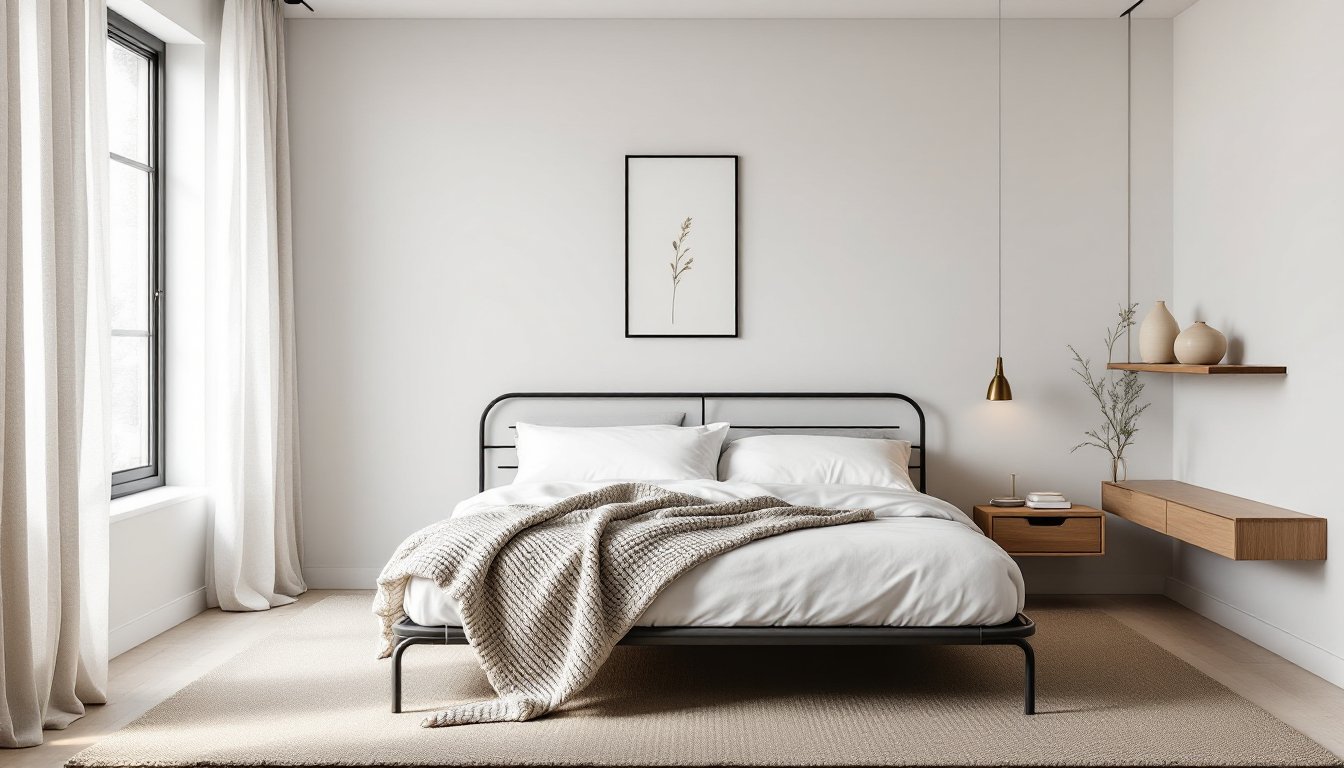
The bed is the focal point. In MCM design, it should have clean, tapered legs (typically 4–6 inches off the ground), a low profile (under 48 inches to the headboard top), and minimal ornamentation. Solid wood frames in walnut, teak, or oak are authentic: light ash or even quality ply veneer can work if the proportions are right.
Headboards range from simple upholstered panels to slatted wood. A slatted wood headboard with horizontal or vertical slats, typically 4–6 inches wide, is quintessentially MCM. If you prefer upholstered, choose a quality fabric, linen, wool, or cotton blend in a neutral tone, and avoid overstuffing. The headboard should float (mount to the wall) or integrate into the bed frame rather than being a bulky attached piece.
Vintage options exist but inspect carefully. Check that the frame is solid (no soft spots, which indicate rot), that drawers slide smoothly, and that any upholstery is either original and intact or can be professionally reupholstered. A solid wood MCM bed frame in good condition holds value: reproduction frames are acceptable if they’re well-made and proportioned correctly.
Research iconic MCM headboard designs to see authentic examples and understand what proportions work.
Nightstands and Dressers
Nightstands should be low, simple, and functional. A typical MCM nightstand is 18–24 inches tall, 24–28 inches wide, and has a single drawer or shelf below a work surface. Tapered legs are standard: a floating shelf mounted to the wall also works if you prefer minimalism.
Dressers in MCM bedrooms are often walnut or teak with tapered legs, horizontal pull handles (flat bar or simple curved hardware), and drawers that are smooth and deep. Avoid overly decorative hardware: simple pulls or recessed handles fit the aesthetic. A 5-drawer dresser (typically 18–20 inches deep and 36–48 inches wide) is practical for bedroom storage without dominating the space.
When buying vintage MCM furniture, look for solid joinery. Rock the piece gently, it should feel stable, not loose. Check that drawers align and don’t stick. Stain and finish can be refreshed if needed, but structural repairs are expensive and require woodworking skill.
Budget considerations: solid wood MCM reproductions from reputable makers cost $800–$2,000+: vintage pieces vary widely ($400–$1,500 for a solid dresser, depending on condition and wood type). Budget stores sometimes offer MCM-inspired frames and nightstands that capture the silhouette but use particle board. These work as temporary solutions but wear poorly.
Incorporate Lighting That Makes a Statement
Lighting is non-negotiable in MCM design. The style embraces sculptural light fixtures, arcs, brass, simple geometric forms. Pendant lights or a floor arc lamp beside the bed combine function and visual interest. Look for fixtures with clean lines, minimal decoration, and warm brass, copper, or matte black finishes.
Overhead lighting should be minimal. A flush-mount or semi-flush fixture in the center of the ceiling works if it’s simple, avoid elaborate chandeliers. Better yet, rely on layered lighting: a statement floor lamp (arc or tripod style), bedside table lamps, and subtle wall sconces on either side of the headboard.
Lamp bases should be ceramic, wood, or brass with simple linen or cotton shades (off-white or pale gray). Avoid overly large drum shades or anything ornate. Vintage MCM lamps in brass or ceramic are readily available: many are marked by designers like Laurel or original maker tags.
When installing wall sconces or pendant fixtures, follow your local electrical code (typically NEC, National Electrical Code in the US). Sconces flanking a headboard should be positioned 60–66 inches from the floor for comfortable reading: ensure wiring runs behind the headboard or within walls for a clean appearance. If you’re not comfortable wiring, hire a licensed electrician, do not improvise overhead electrical work.
Dimmers enhance ambiance and flexibility. Wire sconces or the overhead fixture with a dimmer switch (compatible bulbs required) to adjust light for evening relaxation.
Add Texture and Pattern With Textiles
Textiles are where warmth enters an MCM bedroom. Bedding should be high-quality and neutral: white, cream, soft gray, or a muted tone. Avoid busy patterns: solid colors or subtle texture (a woven cotton blend or linen) are safer. Layering with a throw blanket (a woven wool or cotton throw in a solid or small geometric pattern) and throw pillows adds depth without clutter.
Pillows should be spare, two European shams and one accent pillow at the headboard is typical MCM proportion. Choose covers in linen, cotton, or a wool blend: geometric patterns (abstract, small checks, or simple lines) work better than large prints or tassels. Stick to a color palette of 2–3 tones across pillows and throws.
A area rug under or beside the bed grounds the space. MCM bedrooms often feature a low-pile rug in a solid neutral tone or subtle geometric pattern, typically 8×10 feet or large enough to anchor the bed. Avoid ornate Oriental rugs or ultra-plush shag: a quality wool-blend rug in taupe, warm gray, or natural is more authentic.
Curtains or window treatments should be simple: linen or cotton in a natural or neutral color. Avoid heavy swags or frills. A simple rod with flat panels or a modern roller shade keeps the window treatment minimal and functional. If privacy or light-blocking is needed, consider a cellular shade in a neutral tone paired with lightweight linen panels for softness.
Browse modern home decor inspiration for textile and color pairing examples. You can also explore home decorating ideas to see how designers layer textiles in practice.
Keep accessories minimal: a wood or ceramic vase, a few books, a simple ceramic dish on a nightstand. Every object should be functional or genuinely beautiful, not filler.