A large master bedroom is a luxury, but only if you use it thoughtfully. Too much empty space can feel cold and unwelcoming, while poorly planned layouts waste the square footage you’ve got. Whether you’re starting from scratch or refreshing an existing space, maximizing a large master bedroom means creating distinct zones, choosing statement pieces that fill the room without cluttering it, and layering in lighting, color, and texture that make the space feel intentional. This guide walks through seven practical ideas to transform your master bedroom into a retreat that balances comfort, function, and style.
Table of Contents
ToggleKey Takeaways
- Create distinct zones in your large master bedroom using furniture placement, area rugs, and functional separation—sleeping, reading, and dressing areas—to prevent the space from feeling empty or directionless.
- Invest in a statement bed with a tall headboard (48+ inches) and layered bedding with throw pillows and blankets to anchor the room visually and make the space feel intentional rather than oversized.
- Layer your lighting with ambient ceiling fixtures, task lighting at the bed and dressing areas, and accent lighting like LED strips to eliminate dark corners and set the mood for a true retreat.
- Choose a cohesive color palette using neutral walls with accent colors (sage green, muted blue, warm taupe) combined with mixed textures—linen, leather, woven materials—to create sensory depth and calm.
- Add functional seating options like upholstered chairs, a chaise lounge, or a reading nook positioned 6–8 feet from the bed to transform your large master bedroom from a sleeping space into a relaxing entertainment retreat.
- Incorporate storage solutions that blend style and function—floating nightstands, low-profile dressers, floating shelves, and organized closet systems—to keep the room feeling uncluttered and visually calm.
Create Distinct Zones Within Your Master Bedroom
Use Furniture Placement to Define Sleeping and Relaxation Areas
Large bedrooms often feel directionless without intentional zoning. The key is to use furniture arrangement to carve out separate functional areas, a sleeping zone, a reading nook, a dressing area, rather than letting everything float randomly.
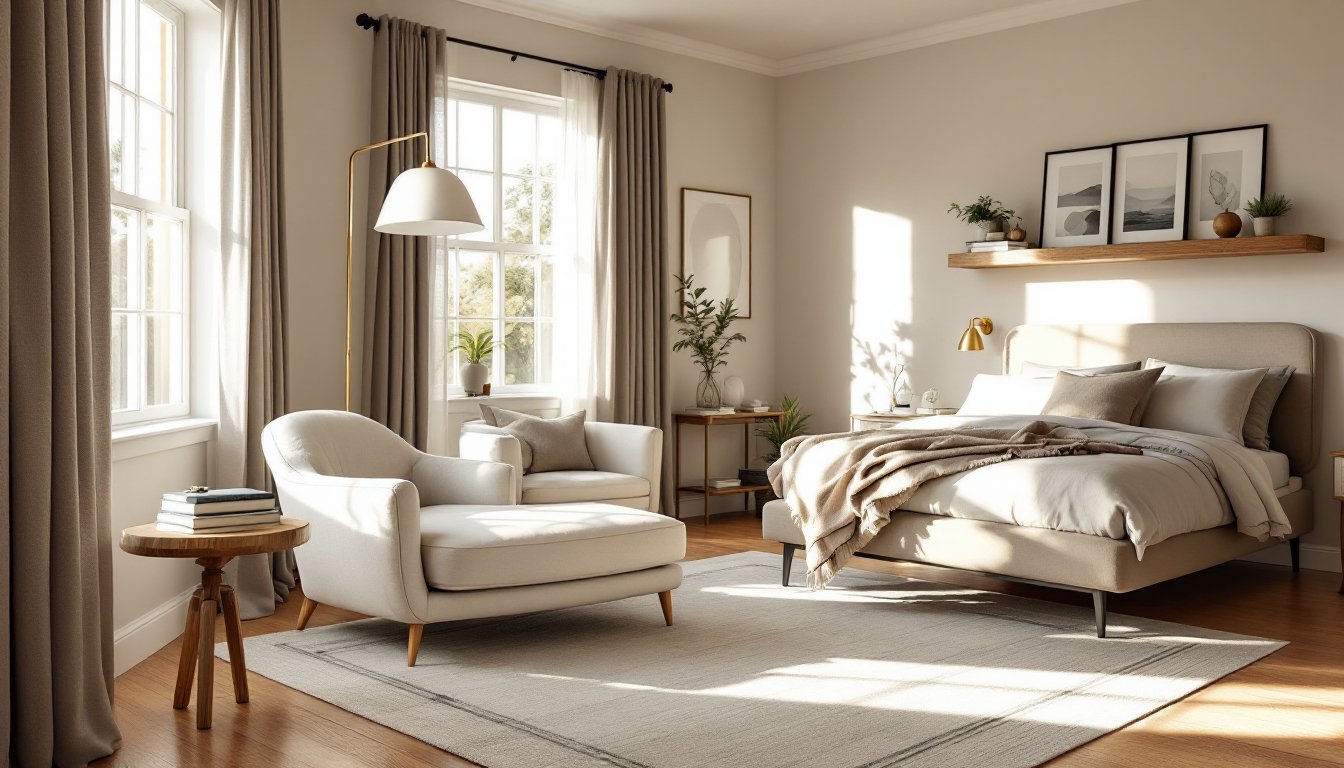
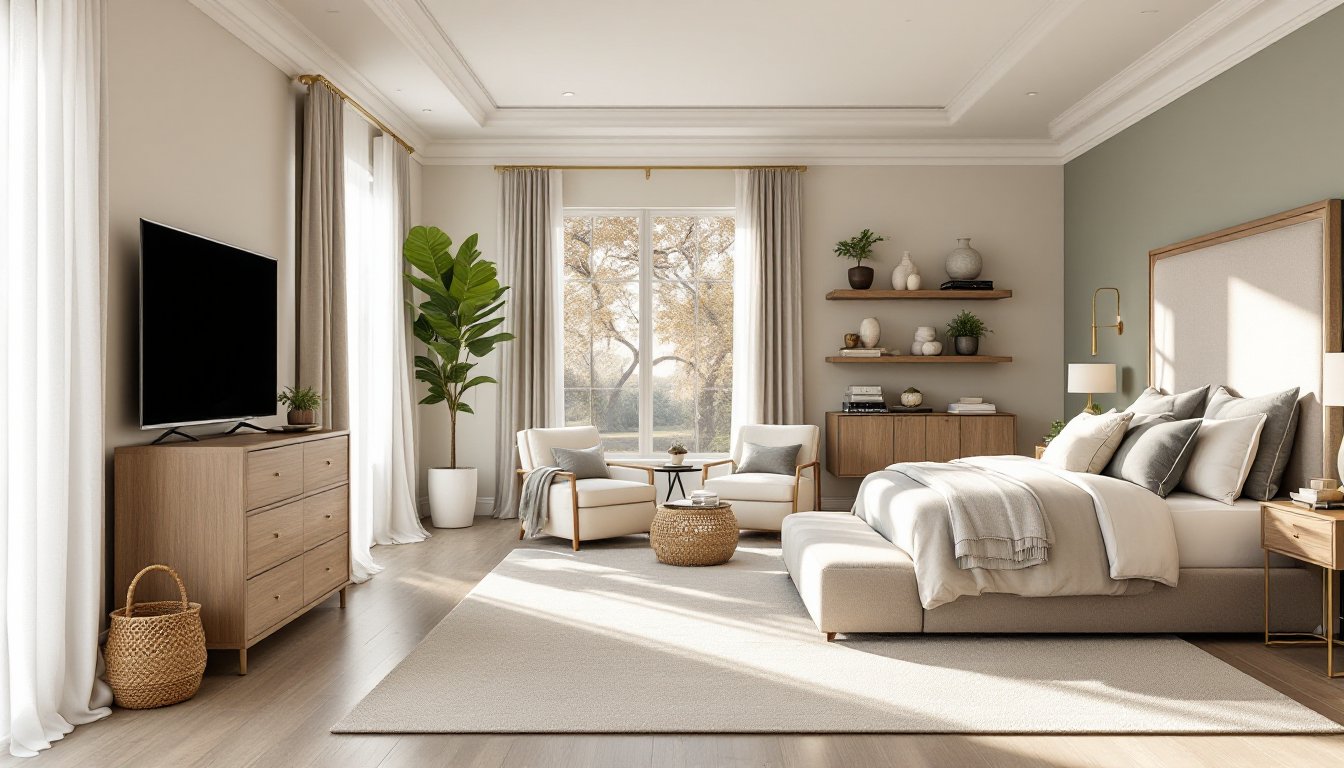
Start by anchoring your bed away from the center of the room. Placing the bed along one wall and positioning a low-profile dresser or console opposite creates a natural sleeping zone. This leaves the remaining floor space for a seating area: a pair of comfortable chairs with a small side table, or a chaise lounge, works well for reading or watching television.
Use a area rug to visually define each zone. A large rug (at least 8′ × 10′) under the bed anchors the sleeping area, while a smaller secondary rug under the seating cluster signals a separate space. The rugs don’t need to overlap: the contrast reinforces the boundaries.
Furniture placement also improves traffic flow. Avoid blocking natural pathways, keep at least 18 inches of clearance on either side of the bed for comfortable movement, and ensure the door swings fully open without hitting anything. This practical consideration prevents the room from feeling cramped even though its size.
Invest in a Statement Bed and Bedding
Your bed is the anchor piece of any master bedroom, and in a large space, it needs to hold visual weight. A full upholstered platform bed, a canopy bed, or a bed with an impressive headboard, even a DIY fabric-wrapped plywood headboard, makes an immediate impact and prevents the room from feeling oversized around standard furnishings.
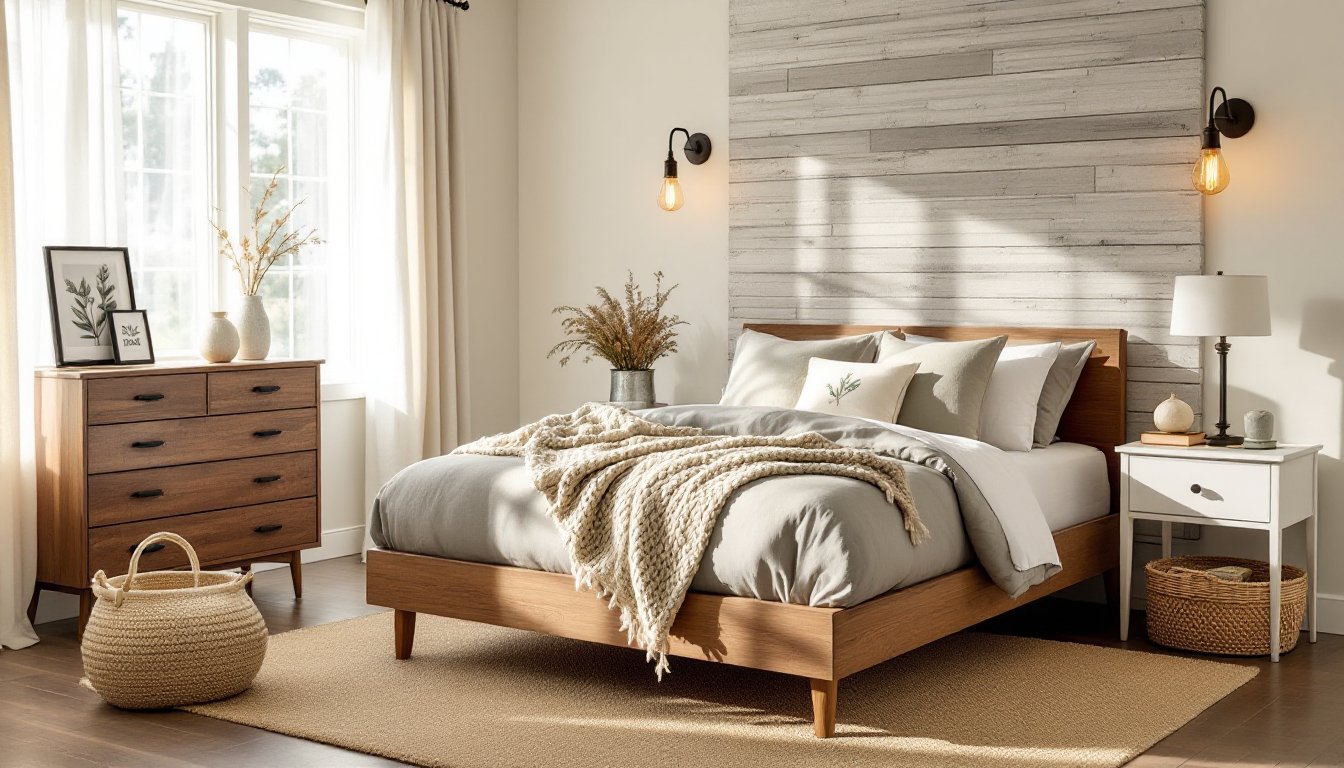
The headboard itself deserves attention. A tall headboard (48 inches or higher) visually fills more wall space and frames the sleeping zone. Consider upholstered headboards in neutral tones like linen, velvet, or performance fabric: these add texture without clashing with other decor. Alternatively, build a simple headboard from interior design inspiration sources: a frame of 1×12 pine board with recessed shelving, wallpaper backing, or shiplap creates a custom look without professional carpentry.
Layering bedding is equally important. A quality mattress (typically 12–16 inches deep) should be paired with a fitted sheet, flat sheet, and duvet or coverlet. Add throw pillows in varying sizes and complementary fabrics, aim for 4–6 pillows depending on bed width. A throw blanket draped over the foot or side of the bed softens the space and adds functional warmth. The more texture and layering, the more substantial the bed appears and the cozier the room feels.
Add Storage Solutions That Blend Style and Function
Large bedrooms demand storage that’s both visible and functional. Built-in closet systems, dressers, nightstands with drawers, and shelving units prevent clutter from accumulating and keep the room feeling organized and intentional.
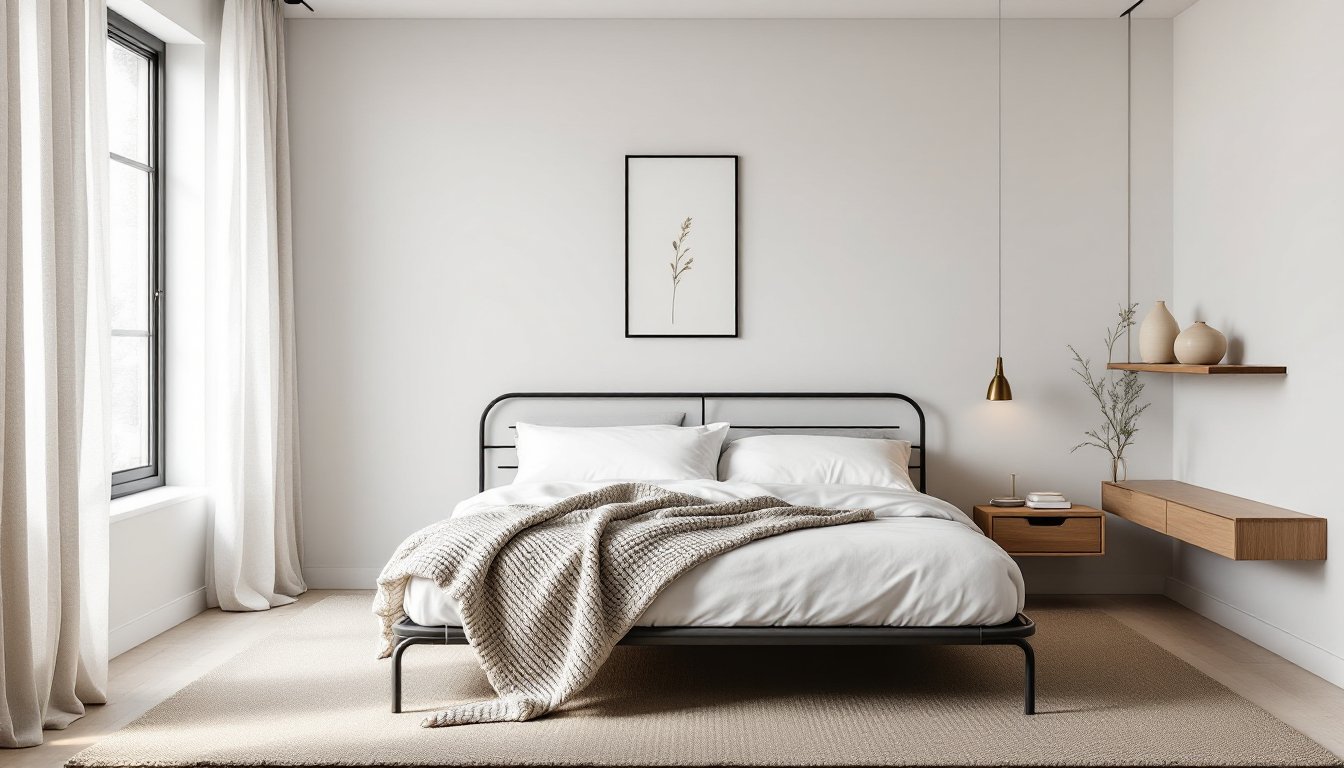
Consider a low-profile dresser (30–36 inches tall) positioned perpendicular to the bed rather than directly across from it, this breaks up sight lines and softens the visual hierarchy. A pair of floating nightstands (24–30 inches wide) flanking the bed provides surface area for lamps and personal items without the bulk of traditional four-legged tables. Floating shelves above the dresser or along an accent wall offer display space without floor footprint.
If you’re tackling built-in storage, a bedroom closet with custom shelving, drawers, and hanging rods maximizes every inch of the existing closet space. Horizontal organizers, shelf dividers, and drawer inserts are inexpensive ways to make existing storage more efficient, this is a finish improvement, not a structural project, so most DIYers can handle it.
Wall-mounted storage also works: a low bookshelf (18–24 inches tall) serves as a visual anchor and functional storage, and it doesn’t crowd the floor. The rule of thumb is to fill storage visible from the bed with calm, organized items, folded blankets, decorative boxes, books, rather than piles of stuff. Visual calm in a large space is everything.
Incorporate Lighting Layers for Ambiance and Purpose
Lighting in large bedrooms requires planning. A single ceiling fixture leaves corners dark and creates harsh shadows, so layer your lighting with ambient, task, and accent sources.
Start with ambient lighting: a ceiling fixture (flush-mount or semi-flush, 15–20 inches in diameter for a standard 12-foot ceiling) or a dimmer-controlled chandelier provides overall illumination. Pair this with recessed lighting around the perimeter of the room (4–6 fixtures, depending on size) on a separate dimmer circuit for flexibility.
Add task lighting at the bed and in the dressing area. Wall-mounted sconces flanking the headboard (6–8 inches from the bed edge, 60 inches from the floor) provide reading light without lamps on nightstands. Near a vanity or dressing area, a strip of mirror lights or a pair of 40-watt equivalent bulbs in swing-arm wall sconces ensures proper illumination for grooming.
Accent lighting sets mood: LED strip lights behind floating shelves, under-bed lighting, or uplighting on an accent wall add depth and warmth, especially when dimmed in the evening. Use warm color temperature bulbs (2700K) in bedside and accent fixtures for a relaxing feel, and slightly cooler neutral tones (3000K) in dressing or task areas for clarity. Home interior design websites often showcase effective lighting layering in master bedrooms, study those photos to visualize the effect.
Design a Spa-Like Retreat With Color and Texture
Color sets the emotional tone of your master bedroom. Large spaces benefit from a cohesive palette: choose a primary wall color and accent it with textiles, artwork, and furnishings in complementary or analogous hues.
Neutral palettes (soft whites, warm grays, warm beiges) expand perceived space and feel calming. Accent walls in deeper tones, sage green, muted blue, warm taupe, add visual interest without overwhelming the room. If you’re painting, use quality primer and 1–2 coats of finish paint for smooth coverage: expect 350–400 square feet of coverage per gallon on walls. Allow proper drying time (24 hours) before assessing color in different lighting conditions.
Texture matters as much as color. Mix matte, soft, and reflective surfaces: linen bedding, woven throw blankets, a smooth leather accent chair, and a plush area rug create sensory depth. Wood furnishings (nightstands, dressers) introduce warmth without adding visual clutter if kept to 2–3 pieces in a consistent stain or finish.
Incorporate natural elements: a potted plant or two, woven baskets for storage, or a wooden wall feature adds organic warmth. Avoid over-styling: a large bedroom can handle fewer pieces in quality finishes rather than a cluttered collection of smaller items. Master bedroom design ideas often feature layered neutral tones with one or two statement textures, study these for inspiration on balance.
Maximize Seating and Entertainment Options
A large master bedroom has room for genuine seating and entertainment beyond the bed. This transforms the space from a sleeping room into a true retreat.
A seating vignette, two comfortable chairs and a small side table, creates an informal gathering or relaxation zone. Look for upholstered accent chairs with good lumbar support (18–24 inches deep, 30–32 inches wide) in neutral fabrics like linen or performance cotton. Position them 6–8 feet from the bed to create visual separation. A chaise lounge or daybed works similarly if you prefer a lounging option.
If entertainment appeals to you, a wall-mounted TV with media console on the wall opposite the seating area avoids clutter on nightstands or dressers. Keep the TV height at eye level when seated (48–54 inches from floor to center of screen). Cable management, running wires through wall conduit or behind the TV, keeps the installation looking intentional, not temporary.
A small bar or beverage station, a narrow table with a few glasses and a carafe of water, is both functional and luxurious. Similarly, a reading nook with a comfortable chair, a small bookshelf, and task lighting creates a defined retreat space within the larger room. These secondary features are finishing touches: start with seating and build from there based on how you actually use the room.