A bare patio can feel exposed and uncomfortable, especially during peak sun hours or unexpected rain. Whether you’re looking to extend your outdoor living season or simply make your patio more functional, the right patio covering transforms how you use your space. The good news: there are proven solutions that range from budget-friendly DIY projects to professional installations. This guide walks through seven practical patio covering ideas, each with distinct advantages for different climates, aesthetics, and skill levels.
Table of Contents
ToggleKey Takeaways
- Patio covering ideas range from budget-friendly retractable awnings ($1,500–$4,000) to durable metal roof structures ($4,000–$12,000+), allowing homeowners to choose based on climate, aesthetics, and skill level.
- Pergolas offer versatile patio covering solutions with open-slat designs providing dappled shade for $800–$2,000, while solid-roof pergolas deliver complete weather protection at $3,000–$8,000 or higher.
- Polycarbonate panels balance rain protection with natural light by filtering UV rays through translucent material, costing $2,000–$5,000 for a 12×16-foot installation with minimal maintenance.
- Shade sails provide modern, minimalist protection with 80–95% UV blocking but require professional anchoring ($1,500–$3,500) due to engineering demands and don’t offer rain protection without steep pitch.
- Metal roof structures are the most durable long-term option, requiring permits and professional installation but offering year-round usability with minimal seasonal upkeep beyond cleaning.
Retractable Awnings for Flexible Sun Protection
Retractable awnings offer flexibility that fixed structures can’t match. You can extend them when the sun is intense and retract them to enjoy an open sky on cooler days or at night. This adaptability makes them ideal for homeowners who want control over their outdoor environment.
Installation and Cost: Retractable awnings mount directly to your home’s fascia or a standalone frame. Most require professional installation, expect $1,500 to $4,000 installed, depending on width and motorization. Manual crank awnings run cheaper but demand more effort. Motorized versions with remote controls or app control add convenience but also complexity.
Durability and Maintenance: Quality acrylic fabrics last 5–7 years before fading or tearing. Check the motor and track regularly for debris, and clean the fabric annually with mild soap and water. Winter storage (retracting fully or removing the awning entirely) extends the lifespan in harsh climates.
Best For: Patios attached to the home, renters seeking temporary shade, or homeowners in variable climates who want seasonal flexibility.
Pergola Designs for Elegant Shade and Aesthetic Appeal
Pergolas are among the most popular patio coverings because they combine style with practical shade. A pergola is an open-framed structure, think of a grid of beams overhead, that filters sunlight while remaining visually light. The appeal lies in their versatility: they work with nearly any exterior style and can be upgraded over time.
Open-Slat Pergolas for Dappled Shade
Open-slat pergolas have spaced beams running parallel (the rafters) that cast shifting shadows throughout the day. This dappled effect keeps the space cooler than full sun but doesn’t block rain. They’re also the cheapest option to build or buy: a basic 10 × 12-foot wood pergola costs $800–$2,000 in materials if you DIY it.
Building Basics: Pressure-treated lumber (2×8 or 2×10 beams) resists rot. Dig holes 2–3 feet deep for posts to prevent frost heave. Use concrete footings, not just soil, for stability. The rafter spacing depends on how much shade you want: 12–18 inches apart provides moderate filtering.
Maintenance: Stain or seal the wood every 2–3 years to prevent weathering. Open slats don’t trap water like solid roofs, so drainage isn’t a concern, but wood rot at post bases requires inspection.
Solid-Roof Pergolas for Maximum Coverage
Solid-roof pergolas (sometimes called louvered pergolas) feature adjustable slats or a full roof panel that can close to block rain and provide complete shade. These are sturdier and more weather-resistant but cost significantly more: $3,000–$8,000 or higher depending on materials and motorization.
Materials and Installation: Aluminum louvered systems are popular because they’re lightweight, low-maintenance, and often motorized. Wood solid-roof structures require robust framing (thicker posts, engineered joists) to handle the added weight. Gutters and downspouts must be integrated for proper drainage, a critical detail many DIYers overlook.
Permit Considerations: Solid roof structures in many jurisdictions require building permits because they affect runoff and may need to meet snow load or wind codes. Check local requirements before you buy materials.
Polycarbonate Panels and Clear Coverings
Polycarbonate panels offer the best of both worlds: overhead protection from rain and UV filtering that reduces glare. Unlike a solid roof, they’re translucent, so you still feel connected to the sky while staying dry. They’re also lighter than glass and far more impact-resistant.
Material Specs: Twin-wall polycarbonate (the most common choice for shade structures) comes in 16–25mm thickness. Thicker panels provide better insulation and durability. Clear panels transmit the most light: frosted or tinted options reduce glare or heat without losing visibility. Most panels include UV inhibitors to prevent yellowing.
Installation Approach: Polycarbonate must be mounted on a sturdy frame, either wood or aluminum. Expansion and contraction with temperature changes is critical to account for: leave ¼-inch gaps at panel edges and use flexible fasteners (not rigid bolts). A 12 × 16-foot polycarbonate-covered patio runs $2,000–$5,000 in materials and installation.
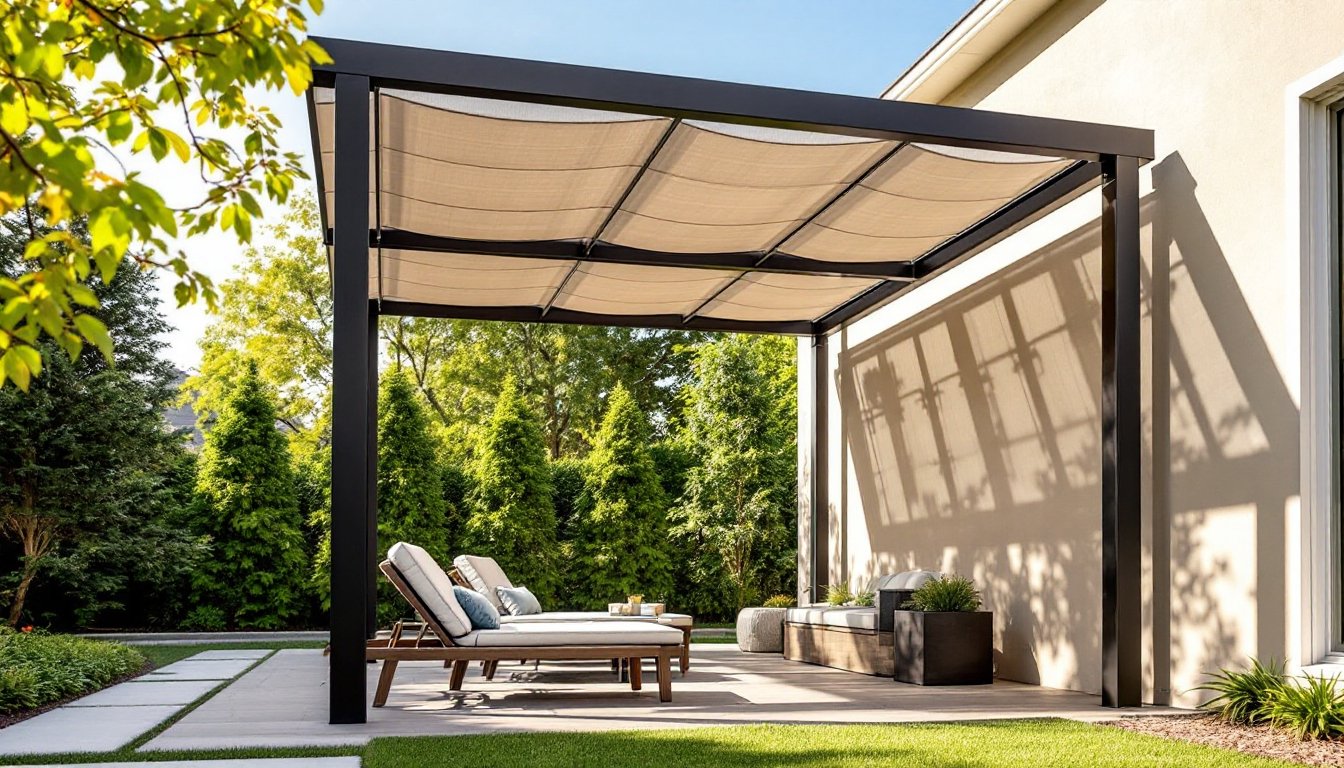
Long-Term Care: Unlike wood, polycarbonate doesn’t rot, but it can scratch or become cloudy over time. Use soft, non-abrasive cloths and mild soap for cleaning. Most panels have a 10–year warranty, but quality varies by manufacturer. Recent designs in outdoor shade structures show how polycarbonate pairs well with modern materials like steel frames.
Shade Sails for Modern, Minimalist Protection
Shade sails are tensioned fabric structures anchored to posts or walls, think of a giant sail catching wind instead of ocean spray. They deliver a sleek, contemporary look while providing 80–95% UV protection depending on fabric density. Setup is faster than building a pergola, and the minimalist design appeals to modern aesthetics.
Setup and Anchoring: Shade sails require strong attachment points: posts sunk 2–3 feet deep in concrete or existing structures (walls, trees, pergolas). Tension hardware and the fabric itself create outward and downward forces that demand engineering: undersized posts or inadequate anchoring will fail, potentially injuring someone below. Many homeowners hire a professional installer ($1,500–$3,500 for a medium sail) rather than DIY.
Fabric Durability: High-quality solution-dyed acrylic or polyester fabrics last 5–10 years. Cheaper PVC-coated polyester fades faster and degrades in UV. White or light colors reflect heat but show dirt: darker shades hide stains but absorb more heat. Regular rinsing removes mold and mildew growth, especially in humid climates.
Limitations: Sails don’t block rain (water pools on the fabric unless pitched steeply), and wind can cause sagging or flapping. In hurricane-prone areas, they must be removable or retractable. They’re best for dry climates or supplemental shade rather than primary weather protection.
Metal Roof Structures for Durability and Year-Round Use
Metal patio roofs, typically aluminum or steel, are the most durable and lowest-maintenance option for serious year-round outdoor living. They handle snow loads, heavy rain, and UV exposure without degrading, and they require almost no seasonal upkeep beyond occasional cleaning.
Material and Engineering: Aluminum is lightweight and rust-resistant, making it ideal for coastal or wet climates. Steel is cheaper and stronger but requires a rust-preventive coating (paint or powder coating). A standing-seam metal roof (with vertical seams that shed water cleanly) is the gold standard. Expect to pay $4,000–$12,000+ installed for a 12 × 16-foot structure, depending on complexity and location.
Building Codes and Permits: Metal roof structures almost always require a permit and engineer-stamped plans. Local wind and snow load codes determine post spacing, footing depth, and rafter sizing. Anything structural that extends from your home (roof pitch, gutters, foundations) must comply with IRC or regional equivalents. Skip permitting and you risk fines, inability to sell, or liability if someone is injured.
Installation Reality: This is professional territory. Metal roofing requires proper flashing, gutter integration, and fastening to prevent leaks and wind damage. DIYing a metal roof structure is technically possible but demands precision and experience. Most homeowners contract it out. Guides showing diverse patio cover options often highlight metal structures for their longevity.
Thermal Considerations: Metal roofs conduct heat, so summer temperatures under an uninsulated metal roof can be hotter than under a pergola or shade sail. Ventilation gaps or reflective coatings mitigate this: some metal systems include insulation panels for year-round comfort.