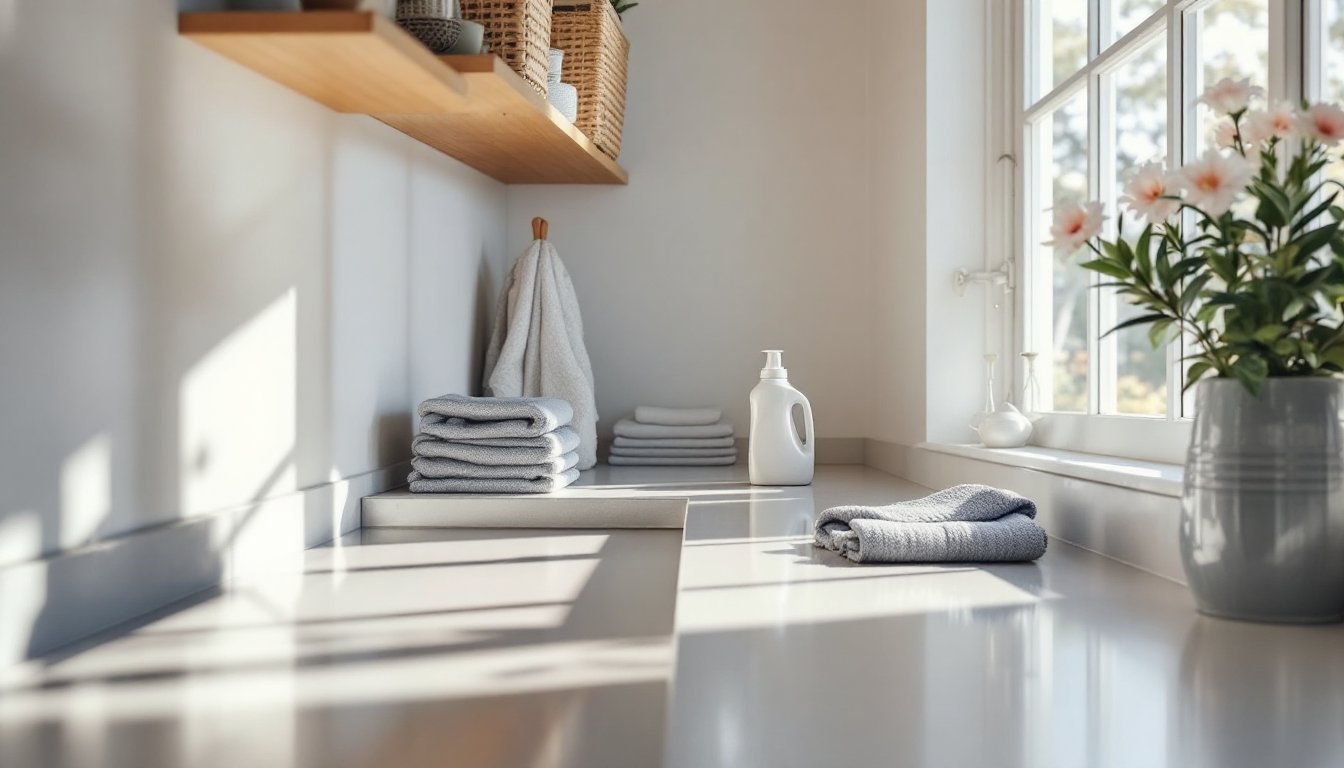
A laundry room countertop often gets overlooked until something spills, breaks, or simply falls apart. Yet the surface you choose makes all the difference between a cramped, frustrating chore zone and a space that actually functions well. Whether you’re sorting stains, folding clothes, or setting down a detergent bottle, your countertop needs to handle moisture, temperature swings, and rough daily use. This guide walks you through seven solid countertop options, from budget-friendly laminate to premium quartz, so you can pick the right surface for your space, lifestyle, and wallet.
Table of Contents
ToggleKey Takeaways
- Laundry room countertop ideas should prioritize moisture resistance and durability, as these surfaces endure constant humidity, temperature swings, and spills that other areas don’t face.
- Laminate countertops offer the most budget-friendly option at $150–$300 per linear foot, lasting 10–15 years with basic care and making them ideal for cost-conscious homeowners.
- Quartz and stainless steel provide the best balance of low maintenance, moisture resistance, and durability, requiring only soap and water without sealing or special treatments.
- Natural stone and tile add timeless beauty but demand regular sealing and grout maintenance, making them suitable only if you’re committed to consistent upkeep in humid environments.
- Measure your space and observe where splashing occurs for a week before choosing, as countertop placement relative to your washer and dryer directly impacts the best material choice for your laundry room.
Why Countertops Matter in Your Laundry Room
Most homeowners think about laundry room updates last, or not at all. That’s a mistake. A well-chosen countertop keeps folding clutter organized, provides space for sorting and stain treatment, and handles the splash and spill that define laundry day. The right surface resists water absorption, doesn’t stain easily, and won’t buckle under the humidity your washer and dryer pump out. Your laundry room endures more abuse than many people realize, detergent spills, pet accidents, temperature fluctuations, and constant moisture. Pick a surface built for that environment, and you’ll avoid costly repairs or premature replacement down the road.
Laminate Countertops: Budget-Friendly and Durable
Laminate remains the go-to choice for budget-conscious DIYers and homeowners who want solid performance without very costly. A laminate countertop consists of a particleboard or plywood base topped with a thin plastic-laminate veneer (usually melamine or polyester). The veneer resists scratches, stains, and moisture reasonably well, and modern patterns mimic stone, wood, and tile convincingly.
Installation is straightforward. You can order pre-formed laminate tops from big-box retailers or work with a fabricator for custom edge banding and sink cutouts. Pre-fab laminate countertops cost between $150–$300 per linear foot installed, making them a solid entry-level option. Maintenance is simple: wipe with a damp cloth and mild soap. Avoid placing hot pans directly on the surface, and use cutting boards.
The tradeoff? Laminate edges can chip if struck hard, and the seams, especially around sink cutouts, can absorb water over years, eventually causing the base to swell or delaminate. For a laundry room where you’re not prepping hot meals, this risk is low. Laminate holds its own and lasts 10–15 years with care.
Butcher Block: Warmth and Natural Appeal
Butcher block brings genuine wood warmth to a utilitarian space, striking a balance between function and aesthetics. Solid hardwood strips (typically maple, walnut, or oak) are edge-glued and finished with food-grade mineral oil or polyurethane. It’s a natural, forgiving look that reads well even in compact laundry rooms.
Butcher block does require commitment. You must reapply mineral oil finish annually, sometimes more often in humid climates, to prevent drying, warping, and water penetration. The surface is softer than stone or laminate, so it scratches and dents more easily: many DIYers view these marks as character. Butcher block typically costs $40–$80 per linear foot unfinished, or $100–$200 installed with finish.
For laundry rooms, the main risk is prolonged water exposure. Unlike kitchen butcher block, which deals with brief spills, a laundry room faces chronic humidity from the washer and dryer. If your space is well-ventilated and you’re diligent about maintenance, butcher block works. If moisture control is poor, the wood will eventually cup, warp, or develop mold. Honest answer: butcher block suits laundry rooms better as a design choice than a practical one.
Quartz and Solid Surface Materials: Low-Maintenance Luxury
Quartz engineered stone combines crushed quartz aggregate with resin binders, creating a non-porous, ultra-durable surface that resists stains, scratches, and bacteria. Brands like Cambria, Silestone, and LG Viastone dominate the market. Solid surface materials (Corian, Hi-Macs) are similar, acrylic or polyester-based composites that look and feel like real stone but are easier to repair.
Quartz is genuinely low-maintenance. Wipe with soap and water: no sealing required. The non-porous structure means water won’t seep into cracks or edges, a huge advantage in a laundry room where moisture is constant. Quartz costs $60–$120 per linear foot installed, higher than laminate or butcher block but lower than natural stone. Solid surfaces run $50–$100 per linear foot.
The catch? Quartz can chip under heavy impact, and resin-based surfaces can yellow slightly over decades if exposed to direct, intense sunlight (unlikely in a laundry room). Both materials require professional installation and are not DIY-friendly for countertop work. For a laundry room, quartz or solid surface offers the best return on investment: durability, low maintenance, moisture resistance, and a premium aesthetic without premium headaches.
Tile and Stone Countertops: Timeless and Water-Resistant
Natural stone (granite, marble, slate) and glazed tile are time-tested, elegant choices that breathe authenticity. Granite is incredibly hard and resists heat and scratches well. Slate offers a matte, quarried look. Tile, ceramic, porcelain, or stone, comes in infinite patterns and is easy to customize with contrasting grout.
Both materials resist water beautifully, making them ideal for wet environments. Installation requires a solid substrate (cement backer board or plywood) and professional setting. Stone runs $50–$150 per linear foot installed: tile is usually $30–$80 depending on material quality.
The tradeoff is maintenance. Stone must be sealed every 1–3 years to prevent staining and water infiltration. Grout lines in tile attract mold and mildew in humid laundry rooms unless you keep them sealed and well-ventilated. Stone can chip or crack if something heavy drops on it, and repairs often require professional help. Marble, even though its beauty, etches easily from acidic cleaners and is not recommended for laundry rooms. If you enjoy the maintenance routine and love natural aesthetics, stone and tile reward that commitment. Otherwise, the upkeep outweighs the appeal.
Stainless Steel: Industrial and Easy to Clean
Stainless steel brings industrial cool to any laundry room and is arguably the most practical option for a high-moisture space. A heavy-gauge stainless sheet (typically 16 or 18 gauge) is bonded over a particleboard or plywood base, creating a seamless, hygienic surface. It’s what commercial laundries and fabrication shops use for good reason.
Cleaning is effortless: warm water, mild soap, and a soft cloth keep it spotless. The non-porous surface resists stains, won’t hold bacteria, and handles both humidity and temperature swings without warping. Stainless costs $80–$150 per linear foot installed. Many modern laundry rooms feature stainless steel, as shown in high-end design galleries, proving it’s no longer just industrial.
The downside is fingerprints and water spots visible on polished surfaces, though brushed or matte finishes hide them better. Stainless can dent if struck hard, and some people find it cold or sterile. For pure function and longevity in a wet, hardworking space, stainless steel is hard to beat.
Choosing the Right Countertop for Your Space
Your decision comes down to three factors: moisture exposure, maintenance tolerance, and budget.
High moisture, low maintenance, modest budget: Laminate is your best bet. It handles splashes, doesn’t require sealing, and costs less to replace if damaged.
High moisture, low maintenance, flexible budget: Quartz or stainless steel. Both are non-porous, resist stains, and require only soap and water. Quartz feels warmer: stainless is purely functional.
Lower moisture (well-ventilated space), maintenance commitment, any budget: Natural stone or tile can work if you’re willing to seal and clean grout regularly. Add beauty to durability, but factor in the work.
Lower moisture, design focus: Butcher block adds character but demands annual oiling and thrives only in dry climates with good air circulation.
Before choosing, measure your space and identify where the countertop will sit relative to your washer and dryer. Direct splashing or steam? Stainless or quartz. Folding zone away from appliances? Laminate or butcher block work fine. Home renovation guides offer detailed cost breakdowns by region, so check local pricing before committing. Also, confirm that your laundry room layout can accommodate the thickness and overhang you want, standard countertop thickness is 1.5 inches, and most codes allow 12–15 inches of overhang without support posts.
Don’t rush the choice. Live with your washer and dryer for a week, take photos of where spills happen, and note the humidity level. That real-world data beats any design magazine spread.